
About Me

Showing posts with label Mediterranean diet. Show all posts

Friday, February 4, 2022

International Cancer Day shouldn’t only be in February: Raising Cancer Awareness should be every day


Cancer affects almost all of us, no matter which country we live in or what age we are. The statistics are frightening.

According to World Cancer Day, 10 million people die each year from cancer. And equally disturbing, figures show that breast cancer is the most common form of cancer.

Wouldn’t the world be a better place if we could bring those figures down?

Have a look at this study based on research for the book 7 Wonders of Olive Oil


The Mediterranean Diet Lowers the Risk of Breast Cancer


As women get older, their risk of getting breast cancer increases. They also have to put up with menopause, which has a definite influence on breast cancer. And life expectancies in Western countries are also increasing. This means that the proportion of women affected by breast cancer is continually growing.

The study is significant  because it focuses specifically on postmenopausal women, where the need for prevention and control is more vital these days. 

The data in this study was the first randomized trial to research whether a Mediterranean diet could protect women from breast cancer.

 It was a parallel study carried out in conjunction with studies on cardiovascular disease by PREDIMED (Prevención con Dieta Mediterránea).

PREDIMED researchers were primarily concerned with nutrition and heart disease, but the trial was also designed to follow the incidence of five different types of cancer, including breast cancer in older women. Researchers chose older subjects for this study, Spanish women between the ages of sixty and eighty, who were almost all menopausal. None of them had cardiovascular disease, but all had either type 2 diabetes or at least three of the significant cardiovascular risk factors that could bring on the condition; these included smoking, hypertension, or family history of diseases. They all had an average body mass index of 30; in other words, they were obese. This in itself is a known risk for breast cancer.

The researchers divided the 4,282 women into three groups:

·                  1,476 were put on a Mediterranean diet supplemented with extra-virgin olive oil. All the women were given a liter of olive oil every week to ensure they followed the research team's specifications. These Spanish women use the oil anyway: it is what they are used to using --  Spain is the largest producer of olive oil.

·                  1,285 were instructed to follow the Mediterranean diet supplemented with 30 grams of mixed nuts daily. They received weekly supplies of nuts during the research period.

·                  1,392 received dietary training and were asked to follow a low-fat diet. After a follow-up period of about five years, the researchers found that thirty-five women had developed malignant breast cancer.

The results revealed that the women who followed the Mediterranean diet supplemented with olive oil showed a 68% lower risk than those who were on the control diet. 

Those in the second group with nut supplements showed a 40% lower risk of breast cancer than the control group.

The researchers said they hoped to see more people following the Mediterranean diet. They concluded that this was one way to reduce cancer, keep cardiovascular disease at bay, and improve overall health and well-being.

Just think, prevention of breast cancer might very well start in our own kitchens.


Monday, October 4, 2021

Why Switching to a Mediterranean Diet and Lifestyle can change the way you look at Food

 The Mediterranean diet not only makes you more aware of what you put in your mouth, it connects you with the environment.

 Research over the years shows many health benefits of the Meditterrean diet but equally important,  this plant-based diet is also environmentally friendly.

The people of the Mediterranean region follow a dietary pattern, not a diet based on individual foods. Look at the choice of diets available today; almost all of them are full of constraints and restrictions. The Mediterranean diet on the contrary, lets you choose.

 More importantly, the Mediterranean diet offers a healthy lifestyle, food made with local ingredients, food that’s easy and practical to prepare. You can understand why it was again voted as the world’s best overall diet, best for diabetes, and a healthy heart.

And what’s good for humans is also good for the planet. Let’s see why:


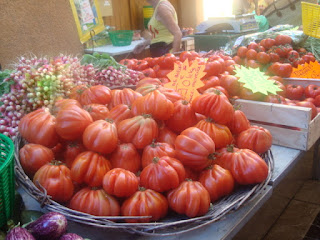
A Mediterranean diet includes lots of vegetables  

Eating Less Meat and More Vegetables  

A weekly shopping list for a Mediterranean diet includes lots of seasonal fresh vegetables and fruit and very little meat.  Ideal vegetables include zucchini, avocados, tomatoes, melon; all are mostly grown locally, all low in fat, and rich in fibre. When you aim for fresh and local, it means you’re cutting out expensive junk food.

Does it seem like a poor man's diet?

Not really. The Mediterranean diet includes fish, poultry dairy products in moderation with very little red meat. These habits can reduce heart disease and other medical conditions brought on by the Western lifestyle.

Let’s face it, meat is expensive, and climate change is making food less accessible. According to researchers in Minnesota and Oxford,  red meat is 35 times more damaging to the environment than a bowl of vegetables.

Include Extra virgin olive oil every day in your diet

Olive oil, the primary source of fat in Mediterranean cuisine, is chockful of healthy nutrients, include it in your salads, on bread, and you can even cook with extra virgin olive oil.

Olive oil producers today are aware of their role in protecting the earth, doing their utmost to respect the soil. Marije Passos, an organic olive oil producer from Portugal, is a fine example. She says, “We have an all-natural approach, using only the climate, animals, and plants to fertilize and maintain our groves.”

Saving the planet doesn't only include work on the estate, as Marije explains:

“With a refillable organic painted glass bottle, our recyclable Bag-in-Box, and low-emission logistics, we hope to set a positive example for current and future generations to make a more positive environmental impact."

 Appreciating Family Life and Food

The Mediterranean diet is a family affair. It's not about the family eating at different times but about family gatherings where they plan food menus together, appreciate those who supply the food, and share the cooking.

The family meal is a nursery of democracy, observes  Michael Pollen, the American food writer.

He is right. Getting the family involved makes our children less reliant on convenience food. It gets them interested in sustainable practices for food production, to learn about how global climate impacts the planet.

With resources getting shorter and shorter worldwide and food availability precarious, shouldn’t we should aim for a simple, fresh, wholesome eating pattern and lifestyle?

 If we’re after a healthy body and a beautiful planet then it’s time to make a move.


A Mediterranean lifestyle means more family involvement 


 Photo credit: Matilde Langevin/ Splash

                      Alice Alech

Saturday, October 13, 2018

The Mediterranean Diet and Breast Cancer

Here are the results of  a study on Greek Women.


 A poor and high-fat diet seems to be one of the leading causes of breast cancer, which is much more prevalent in Western countries.

The Mediterranean diet, on the other hand, is rich in antioxidants and contains only a small amount of animal saturated fats. This study looks specifically at the association of breast cancer and the Mediterranean diet in a Mediterranean country. 14,807 women took part in the European Prospective Investigation into Cancer and Nutrition (EPIC), and the results were published in the American Journal of Clinical Nutrition. 

This study looked at what the women ate; it followed their eating habits for nearly ten years.

The Greek women started the research by answering an in-depth questionnaire about their diet to see how they conformed to the Mediterranean diet. From that, they were given a score from 1 to 9. Those who adhered to typical dietary components got the high score of 9, while those with minimum adherence scored 1. At the end of the study, 240 cases of breast cancer were reported.

In their report, the researchers indicated that, in premenopausal women, there was “no significant association between conformity to the diet and breast cancer risk.” What they did find, though, was an inverse situation with postmenopausal women. They concluded that “conformity to the traditional Mediterranean diet is associated with a lower risk of breast cancer.”

Thursday, September 8, 2016


Comptoir O Huiles: An Olive Oil Bar in Marseille 


The converted old bakery is today a warm, enticing meeting place for lovers of extra virgin.


 On holiday in Marseille, the Parisian couple was curious by the sign “Comptoir O Huiles".  They simply had to go in, have a look and maybe buy some oil from Provence.  They knew hardly anything about olive oil but here in beautifully displayed rustic surroundings was a boutique with an extensive range of olive oils where the owner invited you to learn about the art of tasting olive oil:  here too was a place which served light authentic dishes from Provence all made with healthy extra virgin. 

They were captivated.


What better environment to learn about aromas and olive oil fruitiness?


Gaëlle Carougeau is the owner of Comptoir O Huiles situated in France’s second largest city. She runs her business with real professionalism. The young entrepreneur is an olive oil expert trained by AFIDOL, the French Interprofessional Association of Olive and also a member of the Afidol jury. This means that she is experienced in the different profile flavors of extra virgin olive oil; she knows the importance of the French term Appellation d'Origine Contrôlée, ( the EU equivalent, the Appellation d'Origine Protégée)  

Gaëlle teaches novices how to smell and taste extra virgin, how to recognize the different flavors.  But not all her customers are novices. Some are knowledgeable; they already know about Provencal flavors; these clients are keen to discuss subtle flavors and how best to use them with different dishes.

 How does this connoisseur choose the oils for her boutique?

Gaëlle said that aroma, terroir, harvesting methods and the date of harvest significantly influence her choice. About 80% of her oils come from the region, the rest she buys from producers in Italy and Crete.

The young entrepreneur gets enormous satisfaction from seeing customers seated around her “table d’hote’ sharing, learning and discussing Mediterranean cuisine, olive oil, and food -    all principles of the Mediterranean diet.  She says’ there’s nothing more rewarding than sharing your passion.’

The visiting couple opted for a pasta dish, a Provençal specialty 'Pate a la Poutargeus' followed by a 'fondant au chocolat' made with extra virgin olive oil AOP from the Baux de Provence.
The verdict?

A superb experience, they said delightfully.

“We were shy and nervous to sip and slurp the oils as we started the tasting but Gaëlle is an excellent hostess, with an infectious laugh, and a talent for putting her guests at ease. You couldn’t ask for a better teacher.”